Encyclopedia

Japanese architecture

Also found in: Wikipedia.

Japanese architecture

(500–1700)
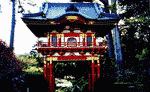
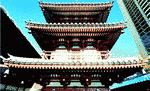
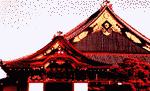
An architecture based exclusively on timber construction, strongly influenced by Chinese design. Simple pavilion structures consist of a wooden framework of uprights and tie beams supported by a wooden platform. Nonbearing walls are constructed of plaster and wood, and sliding partitions of light translucent screens divide interior spaces, with doors and windows of lightweight material. Tiled hipped roofs project wide overhangs with upturned eaves as the result of elaborate bracket systems. Stone is used only for bases, platforms, and fortification walls. Great emphasis is placed on the integration of buildings with their surroundings, with open verandas providing the transition. There is a strictly modular approach to the layout, based on the tatami mat, which governs the entire design of the house. Carpenters became skilled in designing individual types of wooden joints.

Illustrated Dictionary of Architecture Copyright © 2012, 2002, 1998 by The McGraw-Hill Companies, Inc. All rights reserved

Japanese architecture

Architecture of timber construction exclusively, from the 5th cent. A.D. under the strong influence of China. Simple pavilion-like structures consist of a wooden framework of uprights and tie beams supported by a platform, with nonbearing plaster or wood panel walls, sliding partitions, and doors and windows of lightweight material–often paper. The tiled, hipped roofs are widely projecting and upward-turning, on elaborate bracket systems. Stone is used only for pillar bases, platforms, and fortification walls. Great emphasis is put on the integration of buildings with their surroundings, with verandas providing the transition. Proportions of floor dimensions, height, and length of walls follow fixed standards. Modern Japanese architecture, though under strong Western influence, has developed a reinforced concrete style of its own, steeped in its tradition of timber construction.
McGraw-Hill Dictionary of Architecture and Construction. Copyright © 2003 by McGraw-Hill Companies, Inc.
Mentioned in
References in periodicals archive
Yet, when it comes to Japanese architecture, one cannot seem to exist without the other.
MEIJI SHRINE, SHIBUYA ONE of the most popular temples in Japan, this Shinto shrine, dedicated to the Emperor Meiji and the Empress Shoken, combines traditional Japanese architecture with love for nature.
In all, the area is an excellent spot for a few days of quiet rest and relaxation among the traditional Japanese architecture, set against the backdrop of the beautiful Hualien Mountains.
Tokyo, Japan, August 30, 2018 --(PR.com)-- Japanese architecture is well known for its refinement and preciseness; the architectural models made for architects are expected to be elaborate and fine.
"Inspired by the Japanese architecture, the level of sand in the tubes signify the rise and fall of the dunes we see in the desert.
These homes feature a delightful fusion of traditional and contemporary Japanese architecture fused with minimalist yet elegant designs exuding harmony and balance.
Super Potato's president, Takashi Sugimoto, says that in delivering One Palm's design, the firm was inspired by materials found in ancient Japanese architecture and tea rooms.
Providing plenty of historical background, the show seeks to explain the enduring appeal of Japanese architecture to the world and its success as a major center of international modernism.
Japanese architecture firm Nikken Sekkei firm has designed the city's new iconic towers which are connected by the world's largest cantilever.
Japanese architecture firm Kengo Kuma has revealed plans for a plant-covered eco-luxury hotel in Paris, along the left bank of the Seine River.
Copyright © 2003-2025 Farlex, Inc Disclaimer
All content on this website, including dictionary, thesaurus, literature, geography, and other reference data is for informational purposes only. This information should not be considered complete, up to date, and is not intended to be used in place of a visit, consultation, or advice of a legal, medical, or any other professional.