Encyclopedia

rubus fruticosus

Also found in: Dictionary, Financial, Wikipedia.
Enlarge picture
blackberry

blackberry

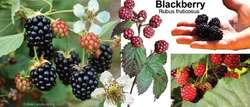
The best known berries in the world, basically black raspberries. Look like mulberries, but grow on a vine. Called “Brambles” in U.K. Entire plant is useable, including roots. Young shoots coming out of ground in spring are great raw in salads. Leaf and root tea used for general health, digestive issues, diarrhea, dysentery, hemorrhoids, sore throat, gum disease, mouthwash. cystitis, gout. Super high in antioxidants and vitamins. Seeds have Omega 3 & 6 fatty acids. Blackberry leaves contain a newly discovered anti-aging anti-wrinkle wonder stuff that fights MMPs,-enzymes that break down collagen and elastin, making our skin loose and saggy and wrinkly. Blackberry leaf extract also has elastin boosting properties. Berries mold very quickly, especially when wet. White 5 petal flowers. Most plants have thorns, even each leaf has one. Best to use leaves only when dried. Root is most astringent part.
Edible Plant Guide © 2012 Markus Rothkranz
Mentioned in
References in periodicals archive
Diversidade e flutuacao populacional de acaros (Acari) em amora-preta (Rubus fruticosus, Rosaceae) no estado do Rio Grande do Sul, Brasil.
Martinez, "Recovery of anthocyanins from residues of Rubus fruticosus, Vaccinium myrtillus and Eugenia brasiliensis by ultrasound assisted extraction, pressurized liquid extraction and their combination," Food Chemistry, vol.
If this was not possible, the fragments were referred to one of the main groups: deciduous trees, coniferous trees, graminoids (grasses and sedges), forbs, bramble (including blackberry Rubus fruticosus and raspberry R.
Rosa macrophylla, Rubus fruticosus, Berberis lycium, Viburnum grandiflorum and Indegofera heterantha are used as living fence around the field.
34 Rubus fruticosus is the scientific name for which wild plant with very edible fruit?
analyses chemicals, minerals, organic acids, antioxidants, and dietary fiber of Mexican blackberry (Rubus fruticosus cv Tupy) residues and compares it with a prune-based commercial product.
In recent years, researchers, fruit growers, and consumers have been increasingly interested in small fruits such as blackberries (Rubus fruticosus L; Rosaceae) and raspberries (Rubus idaeus L.; Rosaceae) because of their content of basic nutrients, fiber, vitamins, and phenolic compounds (Ancos et al.
Copyright © 2003-2025 Farlex, Inc Disclaimer
All content on this website, including dictionary, thesaurus, literature, geography, and other reference data is for informational purposes only. This information should not be considered complete, up to date, and is not intended to be used in place of a visit, consultation, or advice of a legal, medical, or any other professional.