capital
1capital
2Capital
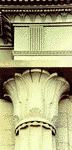

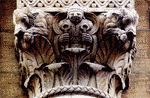
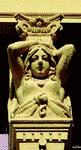
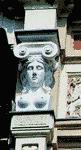
aeolic capital
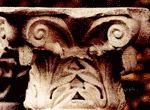
angle capital
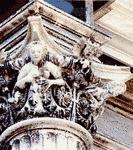
basket capital

bifron capital

bracket capital

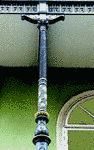

campaniform capital
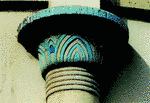
composite capital

cushion capital

capital
- the accumulated wealth embodied in the MEANS OF PRODUCTION or available, or potentially available, for the creation or purchase of the means of production. For MARX, capital is privately owned wealth or VALUE used to generate SURPLUS VALUE (see CAPITALISM AND CAPITALIST MODE OF PRODUCTION).
- in a more general sense, any ‘asset’, financial or otherwise, immediately usable, or potentially usable, as a source of income (see also HUMAN CAPITAL, CULTURAL CAPITAL).
Marx insists that capital must not be seen as a ‘thing’ (see REIFICATION, COMMODITY FETISHISM) but as a socioeconomic relation which only appears thing-like (see APPEARANCE AND REALITY).
capital
[′kap·ət·əl]capital

Capital
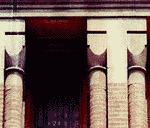
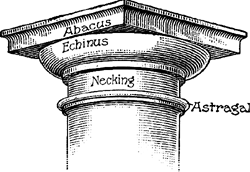
in architecture, the prominent crowning part of a vertical support (pillar or column). The capital transmits the weight from the architrave and superstructure to the support (or to an architectural element, such as a pilaster, that figuratively expresses this supportive function). Various types of capitals appear in the wood and stone architecture of different peoples. The earliest appearance of capitals was in the architecture of ancient Oriental countries. In ancient Greece and Rome, three types of columns were developed—the Doric, the Ionic, and the Corinthian. A combination of elements of the Ionic and Corinthian types resulted in the Composite capital. The use of these classical types of capitals was widespread in European architecture. In China, Japan, and Mexico distinctive capitals were created. New forms also evolved in Byzantine, Romanesque, Gothic, Armenian, Georgian, Middle Asian, and ancient Russian architecture. Since the Renaissance, there have been numerous variations of classical Greek and Roman capitals; classical forms have been combined with local ornamental motifs.
V. F. MARKUZON
Capital
an economic category expressing the exploitation of hired labor by the capitalists; it is the value that returns surplus value. Capital concentrated in the hands of the capitalists is the means of appropriating surplus value. It represents a historical category; that is, it is characteristic of a certain socioeconomic formation.
Capital comes into existence at that stage of commodity-production development when labor power becomes a commodity. In the process of the primitive accumulation of capital the direct producers became separated from the means of production, which became concentrated in the hands of the capitalist entrepreneurs. Deprived of the means of production, the worker was forced to sell his labor power to the capitalists. This process meant a conversion from simple commodity production into capitalist production. In the production process the capitalist combines the commodities that he has acquired on the market: labor power and the means of production. As a result of the productive consumption of labor power and the means of production in the production process after the capitalist completes the sale of the newly produced commodity, he receives a greater value than the one he invested. The general formula for capital was advanced by Karl Marx: M—C—M′, in which Mis money, C is the commodity, and M′ is the amount of money plus the increase. This increase, which is the surplus over the advanced amount, represents the surplus value, which comes from the appropriation by the capitalist of the excess value created by the unpaid labor of the hired workers over and above the price of their labor. The production and appropriation of surplus value in ever-growing proportions constitute the goal of capitalist production. In the era of imperalism, the acquisition of monopoly profit becomes the moving force of capitalist production. As capitalism develops and the domination of capital increases, the degree of the exploitation of workers grows.
Bourgeois political economy ignores capital as a social relation and usually considers it as an aggregate of things (the means of production). Such an interpretation of capital is required to prove that the profit of the capitalists is engendered by capital itself and is supposedly not the result of the exploitation of hired labor. The true scientific analysis of the category of capital was given by Marx: “Capital,” he emphasized, “is not a thing, but rather a definite social production relation, belonging to a definite historical formation of society, which is manifested in a thing and lends this thing a specific social character” (K. Marx and F. Engels, Soch., 2nd ed, vol. 25, part 2, pp. 380–81).
Marx revealed the qualitative difference between constant and variable capital, that is, between that part of the initially advanced capital earmarked for the acquisition of the means of production and the part used to buy labor power. Marx showed that the means of production do not create new value by themselves. In the process of production their value is only transferred to a newly created product (commodity) without any surplus. The new value is created by a specific commodity—labor power in the process of its consumption, that is, as a result of the labor of hired workers. Thus, the value of the means of production (constant capital c) remains unchanged in the process of production, but the value of labor power (variable capital v) increases by the amount of the surplus value (s). Constant capital serves only as a precondition for the creation of surplus value, which is in fact created by variable capital. The division of capital into constant and variable components was originated by Marx. It shows that only the hired labor creates the surplus value, which is appropriated without compensation by the capitalist; the source of capitalist profit and of the income of all exploiter classes is the unpaid labor of hired workers.
A prerequisite for the functioning of capital is its constant movement, capital turnover. According to the character of the turnover, that is, the means by which the value is transferred to the created product, the capital can be fixed or working. Marx scientifically substantiated the division of the capital into fixed and working capital, and at the same time he showed the untena-bility of the identification of fixed and working capital with constant and variable capital, a generalization put forward by bourgeois economists. Marx revealed the role of productive capital, which functions in the process of production.
In the process of capital turnover a part of the capital remains permanently in the form of commodities and money. Isolating these parts of the capital results in the creation of commercial and loan capital, from which the owners of the capital derive that part of surplus value which takes the form of commercial profits and interest. As capitalists strive to derive ever-greater profits, they are compelled to use part of the surplus value for accumulation, which leads to a growing concentration and centralization of capital and to a higher level of concentration of production and the emergence of capitalist monopolies. In this process, capitalism shifts from free competition to monopolistic capitalism.
The teachings of Marx on capital and surplus value constitute the basis of the teachings of Marxist-Leninist political economy on capitalism. Lenin developed Marxist-Leninist political economy by thoroughly analyzing the movement of capital during the era of imperialism and revealing for the first time the essence of an important category of political economy—finance capital.
In a socialist society the means of production are owned by the people and constitute the fixed assets and stocks of socialist enterprises. Therefore, the means of production, goods, and money cannot be transformed into capital.
REFERENCES
Marx, K. Das Kapital, vol. 1. K. Marx and F. Engels, Soch., 2nd ed, vol. 23.Marx, K. Teorii pribavochnoi stoimosti (vol. 4 of Das Kapital). Ibid., vol. 26, chs. 1, 3, 4.
Engels, F. “Konspekt pervogo toma Kapitala K. Marksa.” Ibid., vol. 16.
Lenin, V. I. “Tri istochnika i tri sostavnykh chasti marksizma.” Poln. sobr. soch., 5th ed., vol. 23.
Lenin, V. I. “Karl Marks.” Ibid., vol. 26.
V. G. SHEMIATENKOV
Capital
the chief city and administrative and political center of a country. The capital is usually the seat of the nation’s higher organs of state power and government and of its higher judicial, military, and other institutions. In most cases, the capital is also the economic center of a country, although in some countries another city is the economic center; for example, the capital of the USA is Washington D.C., but the economic center is New York City. As a rule, the capital is a separate administrative unit.