ASCII
American standard code for information interchange: a computer code for representing alphanumeric characters
Collins Discovery Encyclopedia, 1st edition © HarperCollins Publishers 2005
ASCII
[′as‚kē] (communications)
McGraw-Hill Dictionary of Scientific & Technical Terms, 6E, Copyright © 2003 by The McGraw-Hill Companies, Inc.
ASCII
This article is provided by FOLDOC - Free Online Dictionary of Computing (foldoc.org)
ASCII
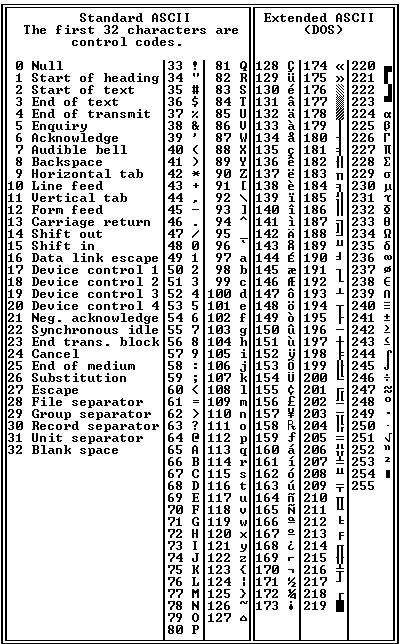
(American Standard Code for Information Interchange) Pronounced "ask-ee," ASCII is the built-in binary code for representing characters in all computers except IBM mainframes, which use EBCDIC coding. ASCII was originally developed for communications and uses seven bits per character, providing 128 combinations that include upper and lower case alphabetic letters, the numeric digits and special symbols such as the $ and %. The first 32 characters are format codes (tab, return, etc.) as well as control codes for communications and printers (see below). See ASCII file, ASCII ribbon campaign, EBCDIC and Unicode.ASCII vs. Hex
In technical editors used by developers, there is a choice between entering data in ASCII or hexadecimal ("hex"). ASCII is all characters, but hex is limited (0 to 9 and A to F). See hex chart and hex editor.
 |
| A Byte Holds ASCII and Then Some |
|---|
| The common storage unit in a computer is an 8-bit byte that holds 256 character combinations (0-255). However, ASCII uses only the first 128 (0-127), and the rest (128-255) are foreign language and math symbols. |
Copyright © 1981-2025 by The Computer Language Company Inc. All Rights reserved. THIS DEFINITION IS FOR PERSONAL USE ONLY. All other reproduction is strictly prohibited without permission from the publisher.