Systems Development Life Cycle
(programming)(SDLC) Any logical process used by a systems analyst to develop an information system, including
requirements, validation, training, and user ownership.
An SDLC should result in a high quality system that meets or exceeds customer expectations, within time and cost estimates, works effectively and efficiently in the current and planned Information Technology infrastructure, and is cheap to maintain and cost-effective to enhance.
US DOJ SDLC.
An SDLC should result in a high quality system that meets or exceeds customer expectations, within time and cost estimates, works effectively and efficiently in the current and planned Information Technology infrastructure, and is cheap to maintain and cost-effective to enhance.
US DOJ SDLC.
This article is provided by FOLDOC - Free Online Dictionary of Computing (foldoc.org)
system development life cycle
The sequence of events in the development of an information system (application), which requires mutual effort on the part of both the user and technical staff. See agile software development and information processing cycle.1. SYSTEMS ANALYSIS & DESIGN
feasibility study
general design
prototyping
detail design
functional specifications
2. USER SIGN OFF
3. PROGRAMMING
design
coding
testing
4. IMPLEMENTATION
training
conversion
installation
5. USER ACCEPTANCE
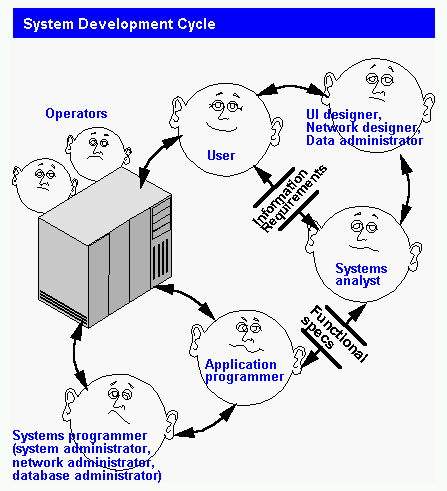 |
| The System Development Life Cycle |
|---|
| From information requirements to final implementation, the system development life cycle is an ongoing process. As the business changes, information requirements change, and the cycle continues. |
Copyright © 1981-2025 by The Computer Language Company Inc. All Rights reserved. THIS DEFINITION IS FOR PERSONAL USE ONLY. All other reproduction is strictly prohibited without permission from the publisher.